As an Amazon Associate, we earn from qualifying purchases. Some links on this site are affiliate links at no extra cost to you. Our recommendations are based on thorough research and editorial judgment.


How Track Saws Work: Complete Guide to Precision Cutting

Track saws are a go-to tool for making those long, straight cuts on big sheets like plywood or MDF. Ever tried cutting a massive board only to end up with a jagged edge? A track saw helps solve that problem with its guide rail system, giving you clean cuts while cutting down on tear-out.
With the ability to plunge cut and adjust the depth, you can tackle a range of materials without breaking a sweat.
Want to know some key features to look out for? Here’s a few:
- Integrated splinter guards give you smoother edges.
- Anti-slip grips keep the saw stable while you work.
- Calibrating your tool and setting up your workspace correctly is essential for the best results.
So, why does this matter? Having a track saw that’s ready to go means less time wasting on fixing errors. You want your projects to turn out well, after all.
Truth is, with the right setup, cutting can be a breeze.
If you’re on the hunt for a track saw, think about what you’ll need in terms of cutting capacity and ease of use. As you get a feel for it, you’ll find how much more precise your work can be.
Now, what project are you planning to tackle with your new saw?
Key Takeaways
- Track saws operate using a guide rail system that ensures straight, precise cuts on large materials like plywood and MDF.
- They feature plunge cutting capabilities, allowing users to cut through full thickness materials safely and accurately.
- Anti-chip technology minimizes tear-out, resulting in smooth edges and cleaner finishes on the workpiece.
- Adjustable depth settings and bevel cut options provide versatility for various project requirements and angles.
- Regular calibration and maintenance of the guide rail and blade enhance cutting precision and overall safety during operations.
What Is a Track Saw and How Does It Work?

Have you ever tried to make a straight cut on a large piece of plywood, only to end up with a wavy edge? It can be frustrating, right? That’s where a track saw comes in handy. This tool is perfect for achieving those precise cuts you need, especially when working with large materials like plywood or MDF.
Track saws ride along a guide rail, turning what could be a difficult task into a breeze. You can make straight cuts without second-guessing yourself. And let’s talk about plunge cuts—this feature lets you cut through the whole thickness of the material, whether you’re doing rip cuts, crosscuts, or even bevel cuts. Ever had a project ruined by tear-out? The anti-chip features on the guide rail protect the workpiece surface, which means you get clean, professional results every time.
Unlike traditional circular saws, track saws limit lateral movement, so you can expect consistent cutting accuracy. This makes it easier to stay on track (no pun intended!) and focus on the details of your work. Plus, many systems are expandable, allowing you to create setups that fit your specific project needs and workspace.
For optimal results when finishing your cuts, pairing a track saw with the right reciprocating saw blades can enhance your woodworking efficiency and blade durability.
If you’re just starting out in woodworking or looking to upgrade your toolkit, consider a track saw. It might just help you save time and effort, which is definitely something we could all use. What’s been your biggest challenge with cutting large materials? Let’s chat about it!
Essential Features for Precision and Control in Track Saws

Have you ever struggled with getting a clean cut on your wood projects? Track saws really shine when it comes to precision and control in those cutting tasks. The guide rail system isn’t just a fancy addition; it helps the saw move in a straight line, which means more accurate cuts for you.
One of the standout features is the integrated splinter guards. These guards minimize tear-out, which protects your workpiece surfaces and leaves you with smooth edges every time you cut. Plus, there’s a handy line-of-cut indicator that makes it easier to see where you’ll be cutting, so you can skip the excess measuring and marking—who doesn’t want that?
You’re probably wondering about maintaining control during those cuts, right? Track saws have got you covered. They reduce side pressure to help prevent burn marks and keep the whole process safer. There’s also the added bonus of adjustable depth settings and anti-slip strips, which allow you to tackle different angles with ease. Additionally, many tools feature ergonomic designs to enhance user comfort and reduce fatigue for longer precision work.
Recommended Products
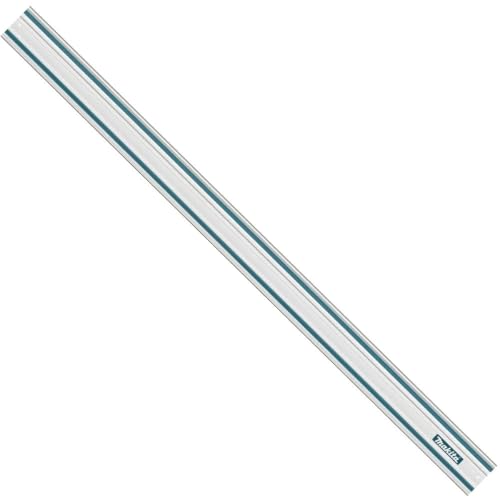
Power Tools and Accessories

Standard kit includes everything needed to mount virtually any circular saw 6.25" - 8.25" (Specialty plate for 10"+)

Precisely straight 82.5 in. (2100mm) track-saw track – manufactured with exacting tolerances to work with the Bosch gkt13-225 track saw and a fully featured track-guidance system
How to Perform Different Types of Cuts With a Track Saw

Have you ever struggled to make clean cuts with your track saw? Trust me, it can be a real headache, but there’s a way to make it easier. Performing different types of cuts with a track saw can truly up your woodworking game.
For rip cuts, a little prep goes a long way. Align the track along the edge of your wood, and make sure your saw is securely attached to the guide rail. This setup helps you achieve those straight cuts that run parallel to the grain without any fuss.
When it comes to cross cuts, there’s a trick to minimize tear-out. Using a sacrificial surface can really save your finish. Plus, don’t forget to check that the guide rail’s splinter guard is in good shape. It’s those small details that can make a big difference in the quality of your cuts.
Bevel cuts require a bit more finesse. You’ll need to adjust the angle of the saw with the locking knobs. Take your time to ensure the saw is stable, and you’ll be amazed at how clean of a line you can get.
Now, let’s talk about plunge cuts. These are essential when you want to create openings in your project. Make sure to set your cutting depth ahead of time and enter the material slowly – this is key to avoiding any kickback that can catch you off guard. Remember, the guide rail needs to be clamped down for stability and accuracy.
Ultimately, these techniques can elevate your woodworking projects. Using accessories like rubber soles and padded straps can improve your safety and comfort while working on elevated surfaces, enhancing overall project efficiency. So, what type of cut are you excited to try next? Give it a shot and see how it transforms your work!
Recommended Products
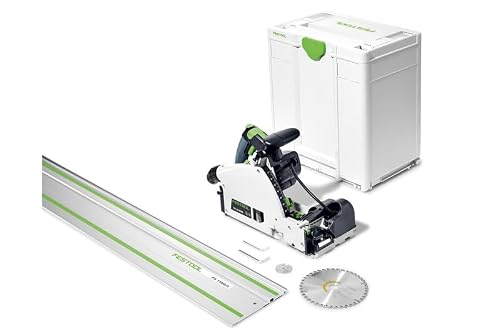
Splinter-free in a single cut. The perfect cut in a portable format. The TSV 60 K has a built-in scoring blade that can be adjusted with precision. Perfect cuts are practically guaranteed with zero-tearout—on both sides. With the TSV 60 K, the first cut is the final cut!
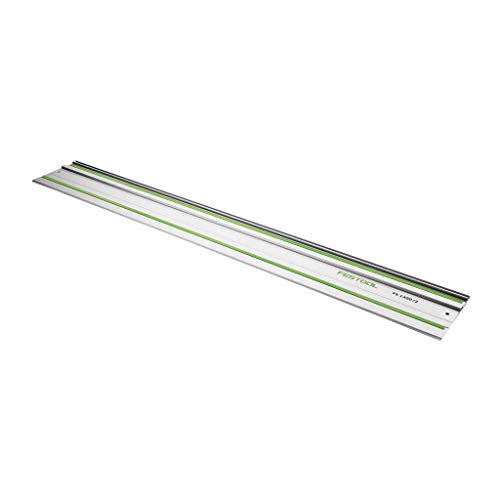
Straight guidance: Easily create straight, splinter-free, glue ready joints when paired with TS Saws, or perfectly guided dados, flutes, or ploughs, with OF Routers.

Can easily be carried to a jobsite, due to its compact size and light weight.
Benefits of Track Saws vs. Table Saws
Are you stuck trying to decide between a track saw and a table saw? It’s a common dilemma for woodworkers, and while both tools bring something unique to the table, understanding their distinct advantages can really level up your projects.
Track saws glide along guide rails, which means you can make precise cuts without a lot of fuss. This setup is a blessing, especially when you’re working in a small shop or handling projects on job sites where space is tight. Here are some key perks of using a track saw:
- Space efficiency: You don’t need a massive setup like you do with a table saw.
- Better control: You get more stability, which helps prevent kickback and drift.
- Reduced tear-out: Many models feature anti-chip technology, so you end up with cleaner edges.
What’s also great is the versatility of track saws. You can handle rip cuts, cross cuts, and angled cuts all with one tool. This means less time switching gears and more time focusing on your craft.
So why does this matter? If you’ve ever dealt with the hassle of multiple saws or dealt with complications from kickbacks, you know just how valuable this is. Using a track saw can streamline your workflow and give you the confidence to tackle different cuts without worrying about messy results.
In short, both track saws and table saws have their place, but for precision and adaptability, track saws often come out on top. They also tend to be more portable and user-friendly, similar to how portable wet tile saw models offer easy transport and enhanced mobility for tile cutting projects. Which tool are you leaning towards for your next project?
Recommended Products
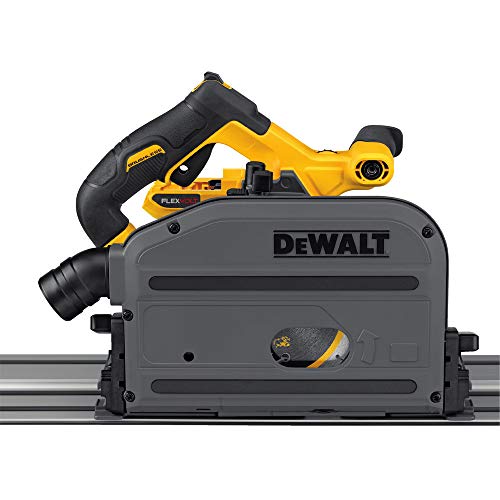
Zero clearance TrackSaw(TM) cutting system delivers straight, splinter-free, precise cuts

Zero clearance track saw cutting system delivers precise, straight, splinter-free cuts.Power Tool Type Corded

Product 1: Featuring a 6. 5-inch diameter (165 mm), a 20 mm arbor, and a rating of up to 9000 RPM
Essential Accessories to Enhance Your Track Saw Experience
Are you tired of making cuts that just don’t feel right? If you’re using a track saw, having the right accessories can really enhance your cutting experience. So, let’s dive into what you might want to consider adding to your setup.
First off, guide rail clamps are a must-have. These little guys hold the guide rail securely to your workpiece, keeping everything stable for those precise cuts. You’ll be amazed at how much this improves your accuracy.
Then there’s the dust collection attachment. Trust me, this is a game-changer for visibility and cleanliness in your workspace. By minimizing debris, it not only helps you see better while you cut but also extends the life of your saw. What’s not to like about that?
If you’re tackling larger materials, consider getting guide rail extensions. They allow you to work on full 8-foot sheets with ease, which can drastically improve overall cut quality. You don’t want to struggle with anything too long, right? A stable workbench helps with that, too. It prevents sagging and keeps your work consistent throughout your cutting tasks.
Here’s the trick: if you want to streamline your process, invest in a parallel guide system. It helps set up for consistent rip cuts. This can save you a lot of time, especially when you’re cranking out multiple boards.
For added safety and ease of use when working on roofs or elevated surfaces, integrating accessories with anti-slip rubber grips can greatly enhance stability and confidence.
Incorporating these accessories can really transform your track saw experience. Don’t you want to make your cutting tasks smoother and more efficient? Give it a shot!
Calibrating and Maintaining Your Track Saw: Essential Tips
Calibrating and maintaining your track saw is crucial if you want it to perform at its best. Ever had a cut that just didn’t go where you wanted? It often comes down to ensuring your saw is aligned correctly with the guide rail. Check that alignment regularly; it helps reduce any lateral slop while cutting, which means more precision in your work.
The next step is to keep that blade clean and sharp. Dull blades aren’t just frustrating—they can lead to kickback, which is something you definitely want to avoid. Give your blade some love and check it frequently. While you’re at it, inspect the plunge mechanism and the cutting depth settings. You want everything to engage smoothly right from the start of your cuts.
So, why does this matter? Well, if your settings are off, each cut could end up being a bit crooked. Using a calibration tool is a solid idea for checking your angle settings, especially when making bevel cuts. It can save you the hassle of doing a bunch of adjustments later and ensures accuracy with every slice.
Don’t forget about that guide rail. Keeping it clean and free from damage is key. A smooth, intact rail not only improves your control but also helps you make those straight cuts easily.
Truth is, all these tips work together to boost your saw’s performance. By taking a little time to check these details, you can ensure your track saw is ready to tackle any project you have in mind. Have you taken the time to calibrate your tools lately? It’s worth it!
Regularly cleaning dust and debris from your tool after each use is essential for tool longevity and maintaining consistent cutting performance.
Setting Up Your Workspace for Maximum Cutting Efficiency
Have you ever felt frustrated trying to get clean cuts with your track saw? It can really throw a wrench in your project if your workspace isn’t set up just right. A stable and level workbench is a must; if it’s sagging, your cuts are likely to be misaligned. Trust me, it’s worth the effort to find or create a sturdy surface to work on.
To keep your cuts precise, make sure to secure your guide rail. Use clamps or brackets to hold it in place, so it doesn’t shift while you’re cutting. A little movement can lead to some not-so-great results, and nobody wants that. Also, consider using a cutting-support grid made from 2-inch thick rigid foam insulation. It supports your sheet materials and prevents any potential damage during cutting.
Before you dive in, take a moment to carefully measure and mark your materials. Remember to account for the offset distance between the guide rail edge and the saw blade. It’s the difference between a clean cut and a jagged edge, right?
And let’s not forget the importance of a clean workspace. A tidy area helps keep your focus sharp and your workflow smooth. Honestly, I can’t stress enough how much easier it is to work without debris cluttering your space.
Additionally, having stable support like a well-positioned multi-position ladder can improve your overall project efficiency by providing better access and safety when working on elevated surfaces. This is why investing in a multi-position ladder is a smart choice for DIYers.
Cool Projects You Can Tackle With a Track Saw
Have you ever stared at a big sheet of plywood and sighed at the idea of cutting it down? Track saws are one of those tools that can change the way you think about woodworking projects. They’re not just for making straight cuts; they can open up a whole new world of creativity and skill enhancement for you.
When it comes to breaking down large sheets, a track saw shines. You can get those big sheets into accurately sized pieces for cabinets or furniture without the hassle. Plus, if you need to make beveled cuts, this tool lets you create beautiful angles for picture frames or tabletops.
Portability is another big win with track saws. Ever find yourself in a tight space while fitting cabinets? It’s a real challenge, right? But with a track saw, you can easily make on-site adjustments without needing a fully set-up workshop.
And if you’re into reclaimed wood, they make cutting it down so much easier. You can really reduce waste, turning what might seem like unusable scraps into something functional. Truth is, for DIY home renovations, a track saw is your best friend. It ensures clean and precise cuts while you’re installing new flooring, cabinetry, or even countertops.
The best part is that your projects end up looking professional, even if you’re just a weekend warrior. So, why not give it a shot? There’s a lot you can do to elevate your woodworking game with just this one tool. What project are you excited to tackle next? Maintaining clean and corrosion-free connections with proper maintenance ensures your power tools and workspace equipment remain reliable.
What to Look for When Choosing a Track Saw?
Finding the right track saw can feel a bit daunting, but it doesn’t have to be. You want a tool that makes your cuts clean and precise, but how do you choose the best one?
Start by thinking about the length of the guide rail. Some systems let you expand the rail, which is handy for those bigger projects. Imagine needing to cut down a plywood sheet—having that extra length can really save you some hassle.
Next, check for anti-chip protection. Thick strips or guards can make a big difference, ensuring your wood looks great and minimizing any tear-out on your edges. You want those clean lines without having to sand down every cut.
The plunge mechanism is also worth paying attention to. If you’re planning to make plunge cuts in a variety of materials, precise depth adjustment is key. You want to feel confident when cutting that you’ve got the depth just right.
Also, think about what accessories you’ll want. Having compatibility with guide rail clamps and parallel guides can really step up your cutting accuracy. It’s all about getting those measurements just right with a setup you’re comfortable with.
And don’t forget about the weight of the saw. Lighter models are usually more portable, which is a huge benefit if you’ve got a small workspace or if you need to transport it often. It can make a real difference in how easily you can move around the job site.
Consider a saw with a built-in LED light for better visibility and accuracy during your cuts, especially in dim lighting conditions.
Frequently Asked Questions
How to Cut Accurately With a Track Saw?
To cut accurately with a track saw, we guarantee proper track saw setup, choose the right blade, focus on measuring precision, and consider material thickness, applying cutting techniques that minimize tear-out for cleaner finishes.
How Does a Track Saw Guide Rail Work?
A track saw guide rail’s like a guiding star in our woodworking journey. It guarantees precision cuts, enhances safety, and when paired with track saw accessories, streamlines maintenance—making our projects more efficient than other saws.
How Does a Track Saw Guide Stay in Place?
A track saw stays in place through its anti-slip features, durable materials, and clamps. These benefits guarantee stability and precision, while regular maintenance helps us choose reliable brands that enhance our cutting accuracy.
Can Track Saws Make Bevel Cuts?
Like a craftsman adjusting their compass, we can make precise bevel cuts using our track saws. By mastering bevel cutting techniques and saw blade angles, we’ll achieve unmatched bevel cut accuracy and experience true track saw versatility.


